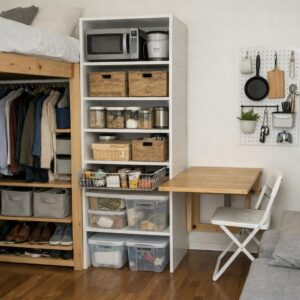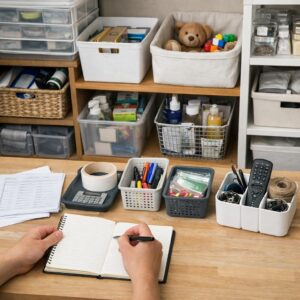
If getting dressed involves searching for a belt, moving piles, or checking several drawers, organize the closet around your routine rather than around perfect-looking categories. Keep frequently worn clothes, shoes, and accessories together and within easy reach. Move occasional and off-season items out of the busiest area.
You do not need a custom closet or a matching set of containers. Start by removing what does not belong, identify the items you reach for most, and give those items the easiest locations to use and maintain.
Clear the Closet Before Buying Organizers
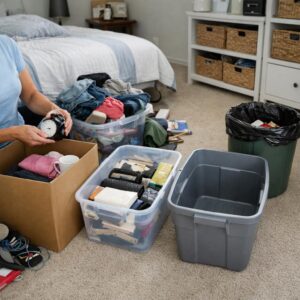
Storage products cannot fix a closet that holds too much or contains items that belong elsewhere. Before measuring for bins or shelves, take everything out of one section at a time. Working in sections is less disruptive than emptying the entire closet, especially if you cannot finish the project in one day.
Sort items into practical groups:
- Wear regularly: Clothes and accessories that fit your current routine.
- Occasional: Formalwear, travel gear, specialty clothing, and sentimental pieces.
- Seasonal: Items that will be useful again but are not needed now.
- Repair or clean: Pieces that need tailoring, stain treatment, or dry cleaning.
- Donate, sell, or recycle: Items you have decided not to keep.
Do not let the repair and donation groups drift back into the closet. Place them in labeled bags or baskets and choose a realistic next step. If you are uncertain about several pieces, put them in a dated review box rather than allowing them to occupy prime hanging space indefinitely.
Build Zones Around How You Get Dressed
Many closets are organized only by garment type: all shirts together, all trousers together, and all shoes on one rack. That can look orderly, but it may scatter the parts of a typical outfit across the space.
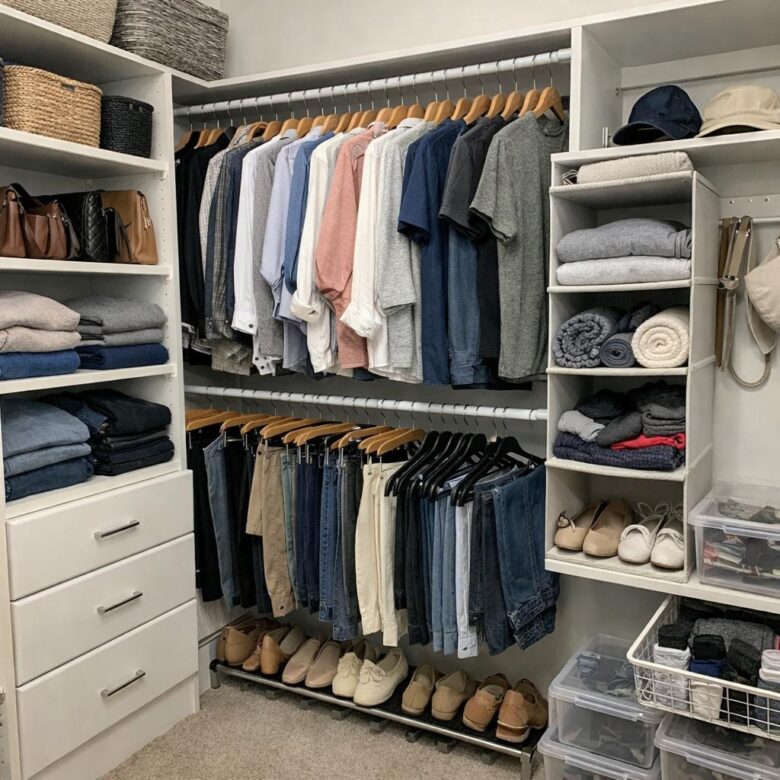
Instead, divide the closet by use first. A weekday zone might contain work shirts, trousers, jackets, belts, and regular office shoes. Another area could hold casual clothes, while exercise clothing stays together in a drawer or basket. Within each zone, sort by garment type or color if that helps you find things.
Choose locations by frequency
- Eye level and waist level: Everyday clothing, frequently used bags, and regular accessories.
- Lower shelves: Shoes, laundry baskets, and sturdy items that are easy to lift.
- High shelves: Labeled seasonal containers, spare bedding, and infrequently used pieces.
- Back corners: Formalwear, luggage, or other occasional items.
Leave a small section of the rod open if you like to plan outfits in advance. One or two prepared outfits may be useful; staging an entire week is optional and can take more effort than it saves for people whose schedules change often.
Arrange Clothes, Shoes, and Accessories
Hanging clothes
Give hangers enough room to slide so you can see each garment. Matching slim hangers can create more space, but replacing every hanger is not necessary. Removing unused hangers and bulky packaging may be enough.
Button or zip garments that slip easily, and avoid placing heavy pieces on hangers that bend. Fold knitwear that stretches when hung. Keep the clothes you wear most toward the front or center of the rod rather than reserving that space for special outfits.
Folded clothes
Short stacks are easier to manage than tall piles. Shelf dividers can help, but smaller categories also work: separate work sweaters from casual sweatshirts, for example. In drawers, arranging shirts or trousers so that each item remains visible can prevent the bottom pieces from being forgotten.
Shoes
Keep everyday pairs where you can reach them without moving boxes. A low rack, open shelf, or over-the-door organizer may suit a small closet. Boxes are more useful for occasional or delicate shoes; label opaque boxes so you do not have to open several to find one pair.
Allow damp shoes to dry before placing them in an enclosed container. If outdoor footwear brings dirt into the closet, a washable mat or tray makes the area easier to clean.
Accessories
Store accessories near the clothing they accompany. Hooks can hold belts, scarves, or frequently used bags, while small divided trays suit watches and jewelry. Avoid deep containers for small daily items because they tend to become mixed together.
Open or clear storage is useful when visibility matters. Opaque, labeled containers are better for off-season items that would otherwise add visual clutter.
Adapt the Setup to Your Space
| Closet type | Useful approach | What to avoid |
|---|---|---|
| Small reach-in closet | Use the door, upper shelf, and floor space while keeping the central rod for daily clothes. | Deep bins that block items behind them. |
| Rental | Choose removable hooks, freestanding racks, shelf dividers, and other reversible options. | Drilling or replacing fixtures without checking the lease or getting permission. |
| Large or walk-in closet | Create distinct zones and keep open floor space for access. | Filling empty shelves simply because space is available. |
| Shared closet | Assign each person clear sections and agree on shared areas for shoes, laundry, or bedding. | Unmarked containers and overlapping categories. |
If the current layout wastes vertical space, measure the closet before considering an extra shelf, hanging organizer, or freestanding drawer unit. Record the width, depth, height, door clearance, and rod position. For more help creating a maintainable setup, see this guide to a simple home organization system.
Include Laundry, Repairs, and Items Leaving the House
A closet becomes cluttered again when there is no place for clothing between “clean” and “ready to wear.” If space allows, provide a hamper for laundry and a small basket or bag for dry cleaning, repairs, or returns. Clothes worn briefly but not ready for washing need a defined hook or section rather than a chair or floor pile.
Keep a donation bag in an accessible but unobtrusive location. When it is full, move it to the next stage instead of starting a second bag. This supports the closet system without requiring another large sorting session.
Avoid These Common Closet Mistakes
- Buying containers first: Sort and measure before choosing storage so the organizers fit both the closet and their contents.
- Using prime space for “maybe” clothes: Move uncertain items to a dated review box.
- Overfilling rods and shelves: Leave enough room to remove and return items without disturbing everything nearby.
- Creating too many categories: Use broad labels you can maintain, such as work, casual, exercise, and seasonal.
- Hiding daily essentials: Reserve closed or hard-to-reach storage for items used less often.
- Ignoring lighting: If the closet is dark, a manufacturer-approved battery light is a renter-friendly option that does not require electrical work.
Use a stable step stool for high shelves, keep heavy containers at a manageable height, and do not overload rods or shelving. Follow the stated weight limits for any storage fixture.
Keep the System Manageable
A short weekly reset is usually more practical than frequent reorganizing. Return empty hangers, pair stray shoes, move laundry to the hamper, and remove anything placed in the wrong zone. At the change of season, review stored clothing before bringing it back into the main closet.
The most useful closet is not necessarily the most uniform or decorative. It is the one that keeps regular outfits visible, gives transitional items a place, and makes putting things away as straightforward as taking them out.

The Anna Leong Editorial Team creates practical guides about home organization, cleaning routines, household care, and productive workspaces. We focus on clear steps, realistic examples, and advice readers can adapt to their own homes.