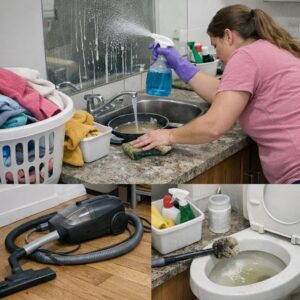
If cleaning keeps taking over your weekend, stop treating the whole house as one job. A more manageable plan is to do a 10-minute reset most days, then schedule two or three focused cleaning sessions during the week.
The checklist below covers the areas that usually need weekly attention, but it is not a rule that every task must be completed every seven days. A one-person apartment, a family home, and a household with pets will have different priorities. Start with kitchens, bathrooms, visible clutter, and frequently used floors, then adjust the rest.
A flexible weekly cleaning schedule
This sample schedule spreads the work across the week. Move tasks to match your work hours, laundry access, household size, and energy level.
| Day | Focus | Main tasks | Estimated time |
|---|---|---|---|
| Monday | Laundry and bedrooms | Wash a load, change bedding if due, clear bedroom surfaces | 15–25 minutes of active work |
| Tuesday | Kitchen | Wipe counters, clean the sink, check leftovers, wipe appliance fronts | 15–20 minutes |
| Wednesday | Bathrooms | Clean the toilet, sink, mirror, tub or shower, and floor | 20–30 minutes |
| Thursday | Living areas | Put away clutter, dust reachable surfaces, straighten cushions | 15–20 minutes |
| Friday | Catch-up | Finish an overdue task or take the day off if the essentials are done | 0–15 minutes |
| Weekend | Floors and household reset | Vacuum or sweep, mop where needed, empty bins, prepare for the week | 30–45 minutes |
If daily cleaning sessions feel more disruptive than helpful, combine the tasks into one longer block. The important part is having a defined stopping point rather than beginning an open-ended attempt to “clean everything.”
The weekly checklist, room by room
Kitchen
- Clear and wipe countertops, moving small appliances only when necessary.
- Clean the sink and faucet.
- Wipe the stovetop after it has cooled.
- Wipe fingerprints and splashes from appliance fronts and cabinet handles.
- Check the refrigerator for spoiled food and leftovers that need to be used.
- Empty the trash and recycling.
- Sweep or vacuum, then mop if the floor needs it.
Weekly cleaning is easier when dishes and food spills are handled daily. Save less urgent jobs, such as cleaning inside the oven or washing cabinet interiors, for a monthly or occasional list.
Bathrooms
- Remove items from the sink and tub edges.
- Clean the mirror, sink, faucet, toilet, and frequently touched handles.
- Clean the tub or shower, paying attention to visible soap residue.
- Replace used towels and empty the bin.
- Vacuum or sweep before cleaning the floor.
- Restock toilet paper and soap.
Give bathroom products the label-directed time to work instead of spraying and immediately wiping. Never mix cleaning products, particularly bleach with ammonia, acids, or other cleaners. Ventilate the room as directed on the product label.
Living and dining areas
- Return dishes, mail, toys, chargers, and other misplaced items.
- Dust tables, shelves, lamps, and reachable electronics with an appropriate dry or lightly damp cloth.
- Wipe the dining table and other frequently used hard surfaces.
- Straighten cushions and fold blankets.
- Vacuum rugs and high-traffic floor areas.
Do not spend the entire cleaning session deciding where clutter belongs. Place homeless items in a small basket and schedule a separate 10-minute sorting session. This keeps cleaning and organizing from becoming one oversized project.
Bedrooms
- Put away clothes and clear the floor.
- Change sheets according to your household’s needs.
- Dust nightstands, dressers, and other open surfaces.
- Empty wastebaskets.
- Vacuum or sweep accessible floor areas.
If washing all bedding at once creates a laundry backlog, stagger bedrooms across different weeks. Pillow protectors, blankets, and comforters may also follow different care schedules; check their care labels before washing.
Floors, laundry, and household basics
- Vacuum or sweep high-traffic areas and beneath easily moved furniture.
- Mop hard floors only with a method suitable for the flooring material.
- Finish active laundry loads and put clean items away.
- Empty vacuum bins or bags and remove hair from accessible brush areas.
- Rinse reusable cloths and mop pads, then allow them to dry.
- Collect rubbish and recycling from around the home.
Not every floor needs wet mopping each week. Spot-cleaning may be enough in bedrooms or lightly used rooms, while entryways and kitchens may need more attention.
Use the right order to avoid repeating work
A consistent order reduces backtracking:
- Remove clutter. Clear the surfaces and floors you need to reach.
- Apply products that need time to work. Follow the label rather than guessing.
- Dust from higher to lower surfaces. Any loose debris can be collected later.
- Clean sinks, counters, fixtures, and other surfaces.
- Vacuum, sweep, and mop last.
- Put supplies away and wash reusable cloths.
Keep a small set of supplies together so setup does not become a barrier. For many homes, microfiber cloths, a suitable general-purpose cleaner, bathroom cleaner, vacuum or broom, mop, and gloves are enough. Use surface-specific products where required, especially on natural stone, unfinished wood, or delicate finishes.
The minimum checklist for an unusually busy week
When time or energy is limited, reduce the routine instead of abandoning it. Focus on sanitation, function, and the mess that affects daily life most.
- Wash dishes and clear kitchen food-preparation surfaces.
- Clean the toilet and bathroom sink.
- Take out rubbish that is full or contains food waste.
- Complete essential laundry.
- Vacuum or sweep the busiest floor areas.
- Spend 10 minutes returning visible clutter to its proper rooms.
Dusting decorative shelves, cleaning low-use rooms, and other cosmetic tasks can wait. The reduced list gives you a practical baseline without turning one missed week into a much larger catch-up session.
Adjust the routine to your home
For a small apartment: Group tasks by type rather than room. Dust all surfaces, clean the kitchen and bathroom, then finish the floors in one compact session.
For a larger household: Divide responsibility by zone or task. One person can collect rubbish while another clears surfaces or handles age-appropriate laundry tasks. Define what “done” means so jobs are not duplicated.
For homes with pets: Add short, frequent passes in areas where fur, tracked litter, or outdoor dirt collects. This may be more useful than vacuuming every room on the same schedule.
For rental homes: Use products and tools that are safe for the provided surfaces. Report leaks, damaged seals, persistent dampness, or other maintenance concerns to the landlord or property manager rather than covering them with repeated cleaning.
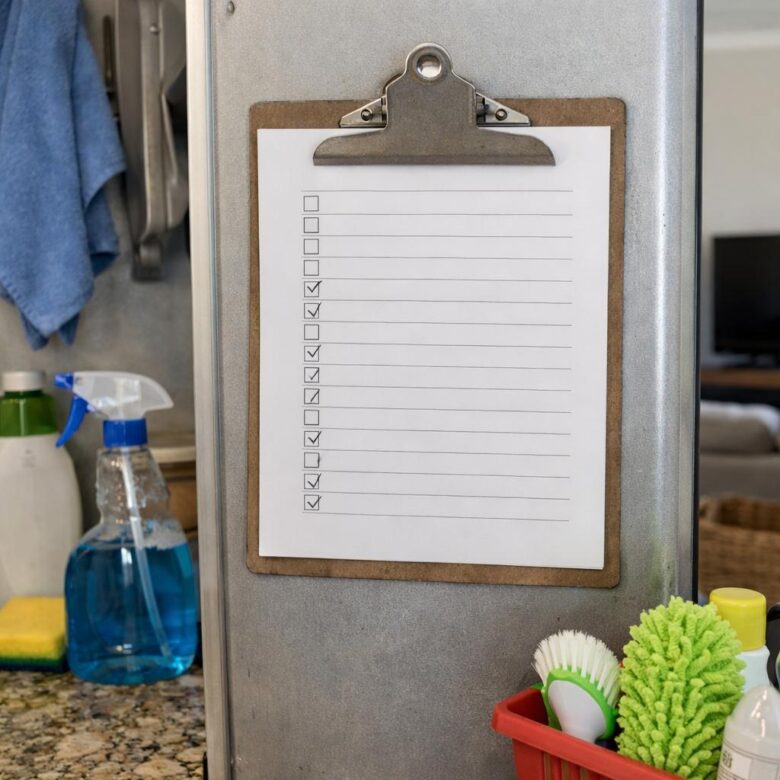
A useful weekly routine is one you can shorten, move, or divide without losing track of the essentials. Keep the checklist visible, review what actually becomes dirty in your home, and remove tasks that do not need weekly attention.

The Anna Leong Editorial Team creates practical guides about home organization, cleaning routines, household care, and productive workspaces. We focus on clear steps, realistic examples, and advice readers can adapt to their own homes.