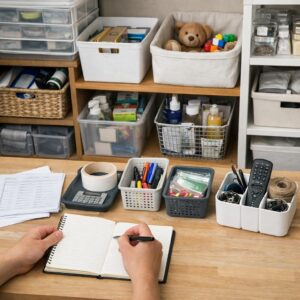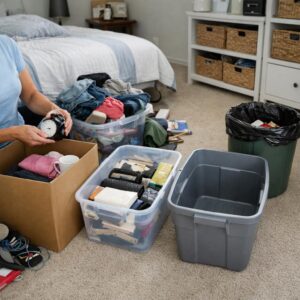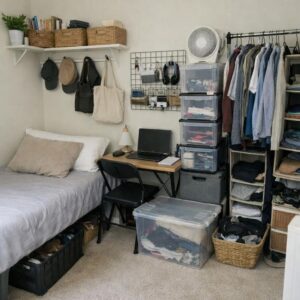
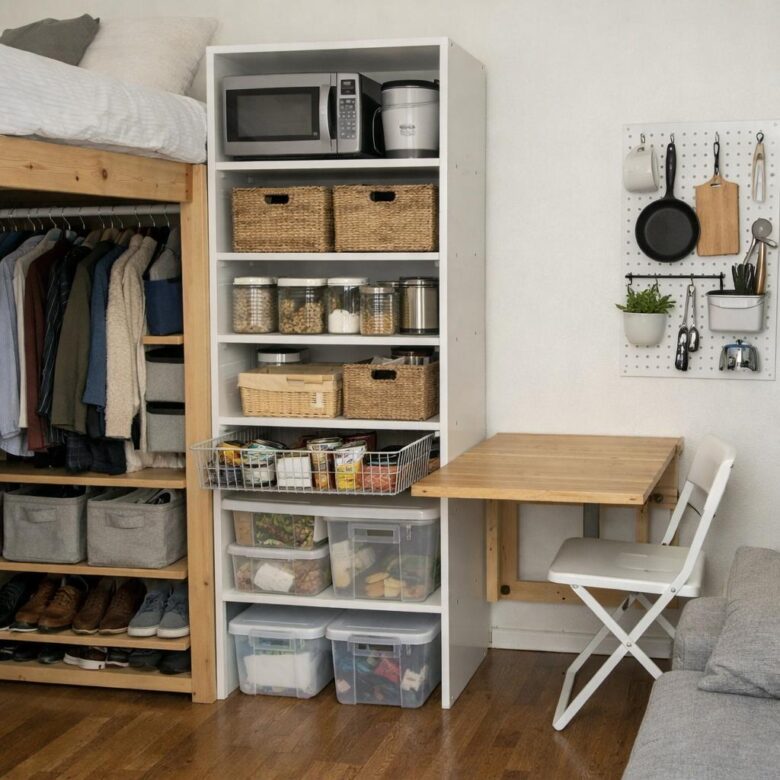
When a small apartment feels crowded, adding more containers is rarely the best first move. Start by deciding what needs to stay, where you use it, and how often you need it. Then choose storage that uses overlooked space without narrowing walkways or making everyday items harder to reach.
The most useful areas are often above furniture, behind doors, under beds, and inside cabinets. Vertical shelves, hooks, drawer dividers, and furniture with concealed compartments can help, but only when they solve a specific storage problem.
Start with the items, not the organizers
Before shopping, make a quick inventory of the category causing trouble. Is the problem too many shoes near the door, nowhere to put pantry staples, or work equipment taking over the dining table? A clear problem leads to a better solution than a collection of attractive but mismatched baskets.
Sort the items into three access levels:
- Daily: Keep keys, shoes, toiletries, cookware, and work supplies within easy reach.
- Occasional: Place spare linens, hobby materials, and serving dishes on higher shelves or toward the back of cabinets.
- Seasonal or archival: Store holiday decorations, out-of-season clothing, luggage, and old documents in the least accessible spaces.
This is also a good time to remove duplicates, damaged items, and things you no longer use. If that feels overwhelming, work through one category or follow a room-by-room decluttering plan before adding storage.
Measure the space and its clearance
Measure height, width, and depth before buying a shelf, cart, or under-bed box. Also measure the space needed to open nearby doors, drawers, and appliances. A cabinet may technically fit beside the sofa but still block the path through the room.
For enclosed storage, measure the opening as well as the interior. Cabinet hinges, bed frames, pipes, baseboards, and sloped walls can reduce usable space. If you plan to use matching bins, check whether you can lift or slide them out comfortably when the shelf is full.
Do not fill gaps needed for appliance ventilation, cover heaters or vents, or obstruct electrical panels and exits. Renters should check lease rules before drilling or mounting anything. Adhesive hooks can be useful for light items, but their stated weight limit and surface requirements still matter.
Use vertical space without crowding the room
Tall, shallow storage usually preserves more floor space than short, deep furniture. A narrow bookcase, wall shelf, or set of hooks can use an empty wall while keeping the center of the room open.
Keep frequently handled or heavy items between knee and shoulder height when possible. Higher shelves are better for lightweight, occasional-use belongings. Closed boxes can reduce visual clutter, while a small amount of open shelving works well for books, plants, or objects you genuinely want to display.
Owned homes may allow fitted shelves or built-in cabinets. In a rental, consider a freestanding ladder shelf, tension-based organizer, over-door rack, or tall bookcase secured according to its instructions. Any tall or top-heavy furniture should be stabilized appropriately, especially in homes with children or pets.
Room-by-room storage ideas
Entryway
A small entry needs a landing place, not a full set of hallway furniture. Use a few hooks for current jackets and bags, a tray or wall-mounted holder for keys, and a narrow shoe cabinet if the walkway allows it. A storage bench can hold accessories, but only if there is enough room to sit and pass comfortably.
Avoid keeping every coat and pair of shoes by the door. Rotate seasonal items so the entry supports the current routine rather than becoming long-term storage.
Living room
Choose furniture that performs more than one job. An ottoman can provide seating, a footrest, and blanket storage. A lift-top coffee table can hold chargers, games, or paperwork while offering a temporary work surface. Side tables with drawers are often more useful than versions with open bases.
Contain small electronics by assigning one drawer or box to remotes, cables, and adapters. Label cables before storing them, and discard unidentified or obsolete ones rather than letting them accumulate.
Kitchen
Small kitchens benefit from dividing existing cabinets before adding freestanding furniture. Shelf risers can separate plates from bowls, while drawer dividers keep utensils from spreading into every available space. Hooks inside suitable cabinet doors may hold lightweight tools, provided they do not stop the door from closing.
A slim rolling cart can work in an open gap, but it should not interfere with appliance doors or ventilation. Store food by category and keep older packages visible so they are used first. Avoid transferring everything into decorative containers unless the containers fit the shelves, seal properly, and make quantities easy to identify.
Bedroom and closet
Under-bed space is useful for spare linens, shoes, or seasonal clothing. Measure around supports and wheels before choosing boxes. Lidded containers help control dust, while soft zippered bags may fit around low frames. Avoid packing textiles away while damp.
In the closet, add a second hanging rail only if most garments are short. Shelf dividers can keep folded clothes upright, and slim hangers may create more room without requiring a new closet system. Keep a small donation bag nearby so unwanted clothing has somewhere to go before it returns to the shelf.
Bathroom
Use the area above the toilet only if shelving will not make the space awkward or place items where they can fall. A shallow wall cabinet, freestanding unit, or small basket can hold spare toiletries. Keep daily products together in one easy-to-clean tray and move backups elsewhere.
Adhesive caddies can help in rentals, but they must suit the wall surface and the weight of the contents. Medicines and items affected by heat or humidity may need storage outside the bathroom.
Home office
If there is no dedicated office, give work supplies a defined boundary. A narrow console can serve as a desk, while a rolling file box or lidded basket can hold equipment after work. A fold-down desk is another option where mounting is permitted and the wall can support it.
Keep only current papers near the work surface. File documents that must be retained, digitize suitable paperwork, and recycle unnecessary copies. Ending the day with a clear desk makes a shared living and working area easier to switch back to household use.
Avoid storage that creates new problems
- Too much open shelving: It can make packaging, cables, and mixed household supplies feel visually noisy.
- Oversized bins: Deep containers encourage unrelated items to collect at the bottom.
- Unreachable daily items: Storage is not helpful if you need a step stool every morning.
- Overfilled doors and walls: Hanging organizers can affect how doors close and make narrow spaces feel tighter.
- No empty capacity: Packing every shelf completely leaves nowhere to put groceries, clean laundry, or new essentials.
Build the system one problem area at a time
Start with the place that disrupts the day most, such as the kitchen counter, entry floor, or work table. Remove what does not belong, measure the available space, and try using containers you already own before buying anything new.
After a week, check whether items are easy to put away as well as retrieve. If they keep returning to the same surface, the assigned storage may be too far away, too full, or too complicated. Adjust the location before adding another organizer. In a compact home, the simplest system is usually the one that leaves room to live.

The Anna Leong Editorial Team creates practical guides about home organization, cleaning routines, household care, and productive workspaces. We focus on clear steps, realistic examples, and advice readers can adapt to their own homes.