When you work full time, the most useful cleaning routine is not a long list of daily chores. It is a small reset that prevents dishes, laundry, and clutter from turning into a much larger weekend job.
Start with three priorities: handle food mess, contain clutter, and keep essential rooms usable. Most days, that means loading the dishwasher or washing necessary dishes, wiping the kitchen counter, putting stray items into their proper rooms, and checking whether the trash needs to go out. Everything else can follow a flexible weekly plan.
Decide What “Clean Enough” Means in Your Home
A workable home does not need to be spotless. It should be sanitary, comfortable, and easy to move through. Clean dishes, usable bathroom fixtures, clear walking paths, and fresh laundry usually matter more than polished appliances or perfectly organized drawers.
Your priorities will depend on the household. Pet owners may need to vacuum high-traffic floors more often. Families with children may spend more time clearing toys and wiping eating areas. Someone living alone in a small apartment may need only a brief floor clean and one laundry day each week.
Separate chores into three levels:
- Essential: food spills, dishes, trash, toilets, necessary laundry, and anything creating an odor or obstruction.
- Routine: vacuuming, changing sheets, cleaning sinks and showers, dusting, and mopping.
- Occasional: cleaning inside appliances, washing baseboards, sorting storage, and reorganizing cabinets.
On demanding weeks, complete the essential tasks and postpone the rest without trying to “catch up” in one exhausting session.
Use a Short Evening Reset
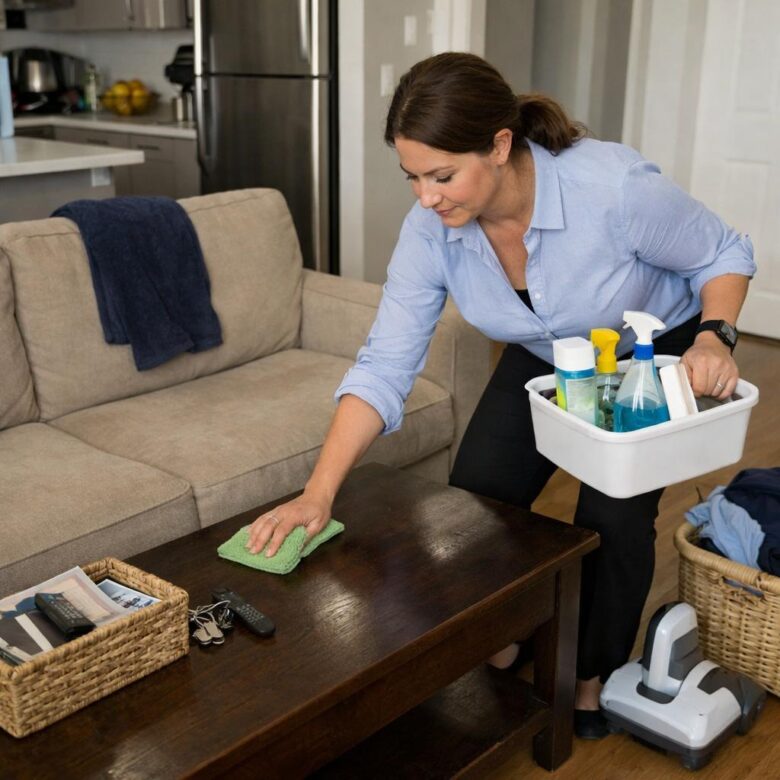
A 10- to 15-minute reset is often enough to stop everyday mess from spreading. Set a timer if that helps you finish rather than drifting into a much longer cleaning session.
- Take dishes to the kitchen and load the dishwasher or wash what you will need tomorrow.
- Wipe food preparation surfaces and deal with fresh spills.
- Return items to their rooms. They do not all need to be perfectly organized.
- Put clothes in a hamper and hang up anything you plan to wear again.
- Check the trash, entryway, and main walking paths.
If you have very little energy, do the first two steps. Food residue and wet messes become harder to clean when left, while a stack of papers or an unfolded basket of clean laundry can usually wait.
Morning routines can also absorb one small task. Emptying the dishwasher while coffee brews, starting a laundry load before leaving, or making the bed takes pressure off the evening. Only run appliances unattended when the manufacturer’s instructions indicate that doing so is appropriate.
Spread Weekly Chores Across Your Schedule
A weekly plan prevents every task from landing on Saturday. You do not need to clean each evening; two or three focused sessions may be enough. Keep worknight tasks limited to one room or one type of chore.
| Day | Focused task | Short version |
|---|---|---|
| Monday | One load of laundry | Wash essentials and leave folding for later |
| Tuesday | Clean the bathroom | Clean the toilet and sink; replace towels |
| Wednesday | No scheduled chore | Complete the basic evening reset only |
| Thursday | Vacuum high-traffic floors | Clean the entryway, kitchen, and living area |
| Friday | Clear surfaces | Put away visible clutter in the main room |
| Weekend | Sheets, mopping, or one deeper task | Choose the task that matters most that week |
Treat this as a template rather than a fixed rule. Shift chores around late meetings, commuting days, childcare, or irregular shifts. A recurring phone reminder can reduce decision-making, but a paper list on the refrigerator works just as well.
Make Common Tasks Easier to Start
Cleaning takes longer when supplies are difficult to reach or every room requires a different product. Keep a small, practical set of supplies near the places where you use them. A bathroom cloth and appropriate cleaner can live in a nearby cabinet; kitchen supplies can stay together under the sink if that location is safe and inaccessible to children and pets.
A basic setup may include:
- Microfiber or washable cleaning cloths
- An appropriate general-purpose cleaner
- A bathroom cleaner if required for your surfaces
- A vacuum, broom, or floor tool suited to the home
- Trash bags and a laundry hamper
Check surface-care instructions before using a product, especially on natural stone, wood, or delicate finishes. Follow label directions, ventilate as directed, and never mix cleaning products.
Optional tools should solve an actual problem. A cordless vacuum may make quick floor cleaning easier in a multi-level home. A robot vacuum may help with crumbs or pet hair on open floors, but it still requires floor pickup and routine maintenance. Neither is necessary if a broom or existing vacuum fits your space and budget.
Reduce the Mess Before It Becomes a Chore
Small systems can remove work from the cleaning schedule altogether. Put a hamper where clothes are usually dropped. Keep a tray near the entrance for keys and mail. Place a basket near stairs for items that belong on another floor. Give frequently used belongings an easy-to-reach home rather than a complicated storage system.
Containment is useful when there is no time to organize properly. Gather misplaced objects into one basket during the evening reset, then empty it once or twice a week. Avoid creating several permanent “deal with later” bins, which simply hide clutter instead of reducing it.
If more than one person lives in the home, divide responsibility rather than waiting for someone to volunteer. Assign complete tasks—such as dishes, bathrooms, or laundry—instead of asking one person to notice and manage everything. The division does not need to be identical, but it should be clear.
Have a Minimum Routine for Difficult Weeks
Travel, deadlines, illness, and family obligations can disrupt any schedule. For those periods, use a minimum routine:
- Wash enough dishes for the next day.
- Remove food waste and overflowing trash.
- Clean spills and keep main walkways clear.
- Wash essential clothes, towels, or bedding as needed.
- Clean the toilet and bathroom sink when they need attention.
When time returns, resume the normal schedule with the next planned task. Do not begin by deep-cleaning the entire home.
Use Weekend Time Selectively
Choose one defined weekend block rather than allowing cleaning to consume the whole day. A 45- to 90-minute session can cover floors, sheets, and one neglected area, depending on the size and condition of the home. In a larger household, split the list among the people who live there.
If the budget allows, occasional paid cleaning can be used for time-consuming tasks such as bathrooms and floors. It is an option, not a requirement. Before arranging help, decide which tasks create the most pressure and what still needs to be handled between visits.
The goal is a home that supports your working life. Keep daily resets short, schedule only a few weekly chores, and lower the standard during unusually busy periods. Consistency matters more than completing every possible cleaning task.

The Anna Leong Editorial Team creates practical guides about home organization, cleaning routines, household care, and productive workspaces. We focus on clear steps, realistic examples, and advice readers can adapt to their own homes.