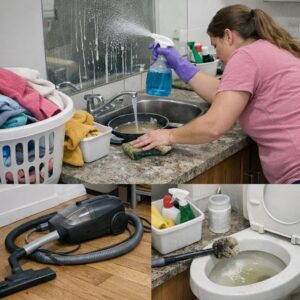
When a room smells unpleasant, start by removing or cleaning the source rather than adding fragrance. Empty the bin, wash the pet bedding, clean the spill, dry the damp surface, or clear spoiled food before reaching for a deodorizer.
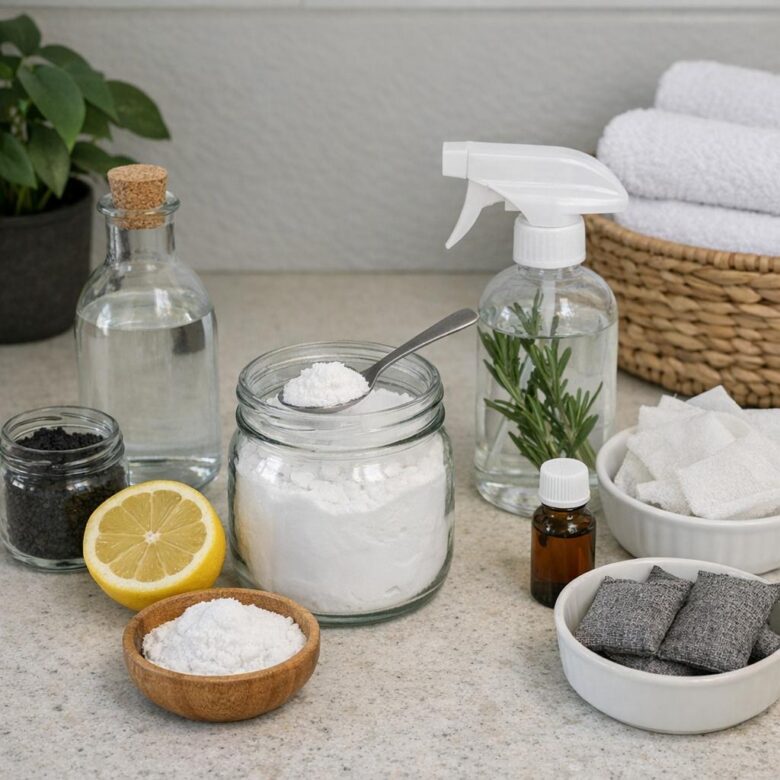
Fresh air, baking soda, white vinegar, and activated charcoal can help with many everyday odors, but they are not interchangeable. The right choice depends on whether the smell is coming from fabric, moisture, food residue, smoke, a drain, or another source.
A quick guide to common odors
| Odor | First step | Useful follow-up |
|---|---|---|
| Cooking | Wash greasy cookware and wipe nearby surfaces | Ventilate and wash kitchen textiles |
| Trash | Remove the waste and wash the bin | Dry the bin before adding a new liner |
| Pet bedding | Wash according to the care label | Clean the floor underneath and dry everything fully |
| Musty room | Look for damp materials or poor ventilation | Reduce humidity and investigate recurring moisture |
| Refrigerator | Discard spoiled food and clean spills | Add an open container of baking soda |
| Smoke | Remove the smoke source and ventilate when safe | Wash affected hard surfaces and fabrics |
Find the source before treating the air
A stale-smelling room may have several small causes: a damp bath mat, an overdue HVAC filter, food residue under an appliance, full trash, or upholstery holding cooking and pet odors. Walk through the room and check likely trouble spots rather than treating the entire space at once.
- Look under rugs, furniture, pet bowls, and removable appliance trays.
- Check laundry hampers, shoes, reusable cleaning cloths, and pet bedding.
- Inspect sinks and drains for visible debris or a dry drain trap.
- Notice condensation, damp drywall, wet flooring, or leaks around plumbing.
- Check heating and cooling filters and replace them according to the system instructions.
If an odor returns soon after cleaning, the source probably remains or the cleaned material did not dry completely. Repeated deodorizing will not correct a leak, sewage problem, pest activity, or concealed moisture.
Use ventilation and moisture control first
Open windows for a short cross-breeze when outdoor conditions allow. Run kitchen and bathroom exhaust fans during cooking and showers, and leave them on briefly afterward. In humid rooms, a dehumidifier can be more useful than a bowl of deodorizer because it addresses the damp conditions that allow musty smells to persist.
Renters can document leaks, recurring damp patches, sewage odors, or ventilation problems and report them to the landlord or property manager. Homeowners may need an appropriate plumber, HVAC technician, pest professional, or building professional, depending on the suspected cause.
Where baking soda helps
Baking soda is most useful as a dry odor absorber in small, contained areas. Keep an open container in the refrigerator after spoiled food and spills have been removed. It can also be placed in a breathable sachet near shoes or in a closed cupboard, provided children and pets cannot reach it.
For a washable rug or carpet with a mild surface odor, first check the care instructions and test an inconspicuous area. Apply only a light amount, let it sit briefly, and vacuum thoroughly if the carpet and vacuum manufacturers permit it. Avoid heavy applications, which can leave fine residue in carpet fibers or equipment.
Do not use baking soda as a substitute for cleaning pet urine, vomit, or food spills. Remove solids, blot liquid, and use a cleaner suitable for that material. An enzyme cleaner may be more appropriate for organic pet stains; follow its label and keep pets away until the area is ready for use.
Where white vinegar is useful
Diluted white vinegar can help remove some residue and odors from washable, acid-safe surfaces. It may be used on selected bins, glass, or washable household items when their care instructions allow it. Wipe or rinse as needed and dry the surface well.
Vinegar can damage or dull natural stone, some grout, waxed wood, certain metals, and other acid-sensitive finishes. Test an inconspicuous spot if the material is uncertain. Never mix vinegar with chlorine bleach, and do not combine household cleaning products unless their labels specifically direct you to do so.
Pouring vinegar or other mixtures into a drain is unlikely to solve an odor caused by a blockage, plumbing fault, or dry trap. Remove accessible debris safely, run water in an infrequently used drain, and arrange appropriate help if a sewage-like smell continues.
When activated charcoal can help
Activated charcoal adsorbs some airborne odor compounds and can be useful in a closet, shoe cabinet, car, or other small space. It works best after the odor source has been removed. Follow the product directions for placement, replacement, and any recommended reactivation.
An air purifier may help with airborne particles, but odor control depends mainly on an adequate activated-carbon component; a HEPA filter primarily captures particles. No purifier can make an active smoke source, damp material, or dirty litter box unnecessary to address.
Room-by-room odor removal
Kitchen
- Remove old food, trash, and recycling.
- Wash the bin, sink strainer, appliance drip trays, and any greasy splash areas.
- Launder dish towels and cloths rather than leaving them damp.
- Ventilate during and after cooking.
- Check under and behind movable appliances if an unexplained food smell remains.
Bathroom
Wash towels and bath mats regularly, clear hair and soap residue from accessible drain parts, and dry wet surfaces. Use the exhaust fan or open a window where practical. A musty smell that repeatedly returns deserves a moisture check rather than more fragrance.
Bedroom and living room
Wash removable covers and bedding according to their labels. Vacuum upholstery, rugs, and the areas beneath furniture. Avoid soaking cushions: excess liquid can reach the foam and dry slowly, making the odor worse. Use light moisture only when the care instructions permit wet cleaning.
Pet areas
Empty litter boxes and wash pet bowls, bedding, and washable mats on an appropriate schedule. Clean accidents promptly with a surface-compatible product. Do not apply essential oils or strongly scented homemade mixtures around pets; some substances that seem natural can still be irritating or unsafe.
Mistakes that keep odors around
- Masking before cleaning: Sprays, candles, and plug-ins may mix with the original odor without removing it.
- Using too much water: Saturated carpet, upholstery, and padding can take too long to dry.
- Ignoring fabrics: Curtains, cushion covers, towels, and pet bedding often retain cooking or smoke odors.
- Using one cleaner everywhere: Vinegar, baking soda, and enzyme products suit different materials and problems.
- Overlooking airflow: Odors linger when cooking steam and bathroom humidity cannot escape.
When deodorizing is not enough
Stop treating the smell as a routine cleaning problem if it resembles gas, sewage, burning electrical material, heavy smoke damage, or a dead animal, or if it is accompanied by visible water damage or substantial mold growth. Leave the affected area when necessary and contact the landlord, utility, emergency service, or qualified trade appropriate to the hazard.
For ordinary household odors, the simplest sequence is usually the most effective: remove the source, clean the affected material, dry it completely, improve ventilation, and then use an odor absorber if needed.

The Anna Leong Editorial Team creates practical guides about home organization, cleaning routines, household care, and productive workspaces. We focus on clear steps, realistic examples, and advice readers can adapt to their own homes.