If clutter keeps returning after you tidy, the problem may be the system rather than your effort. Start with one high-traffic area, remove what does not belong there, and give each remaining item a home that is easy to reach and easy to use.
A maintainable system does not require matching containers or perfectly folded drawers. It should answer three everyday questions: Where does this go? Can I put it away quickly? Is there enough room for it?
Start where clutter interrupts your day
Do not begin with the largest room or the messiest closet unless it is causing the most trouble. Choose a small area that regularly slows you down, such as the entryway, kitchen counter, bathroom sink, home-office desk, or laundry drop zone.
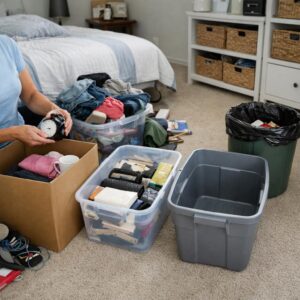
Before buying storage, sort the area into four groups:
- Keep here: Items used in this location.
- Move elsewhere: Items that already have a logical home in another room.
- Remove: Rubbish, broken items, unwanted duplicates, and anything you are ready to donate.
- Undecided: Items that need a decision but should not stop the entire project.
Limit the undecided group to one box or basket and set a date to revisit it. This keeps difficult decisions from spreading back across the room.
Follow existing habits instead of fighting them
Notice where objects naturally land. If keys are always placed near the front door, add a small tray or hook there. If clothes collect beside the bed, that may be the right location for a hamper. If school papers reach the kitchen before anywhere else, create a paper tray or wall file in that area.
The most logical storage location is usually close to where an item is used, picked up, or taken off. A storage solution on the other side of the home adds extra steps and is more likely to be ignored.
Match access to frequency of use
- Daily items: Keep them visible or behind a single easy-to-open door or drawer.
- Weekly items: Store them in reachable cabinets, shelves, or labeled containers.
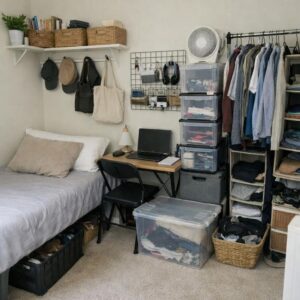
- Seasonal items: Place them on higher shelves, under a bed, or in less accessible storage.
- Rarely used items: Consider whether they need to remain in the home at all.
Avoid placing frequently used objects behind stacked bins. If you must move one container to reach another, the setup may be suitable for seasonal storage but not for everyday supplies.
Give categories clear boundaries
Each category needs both a home and a limit. A drawer can hold charging cables, a shelf can hold spare toiletries, and one basket can hold reusable shopping bags. When that space is full, sort the category before expanding it into another area.
Choose broad labels that household members can understand without explanation. Categories such as cables, school papers, cleaning cloths, and pet supplies are usually easier to maintain than highly specific subdivisions.
Leave some open space in drawers, bins, and cabinets. Containers filled to the top are harder to search and put away. Open space also gives the system room to handle groceries, clean laundry, incoming paperwork, and other normal fluctuations.
Use storage only when it solves a specific problem
Organizers are useful when they separate categories, make better use of a shelf, or prevent items from falling over. They are not a substitute for sorting. Measure the available space and the items you plan to store before purchasing containers.
Many systems can be created with items already at home:
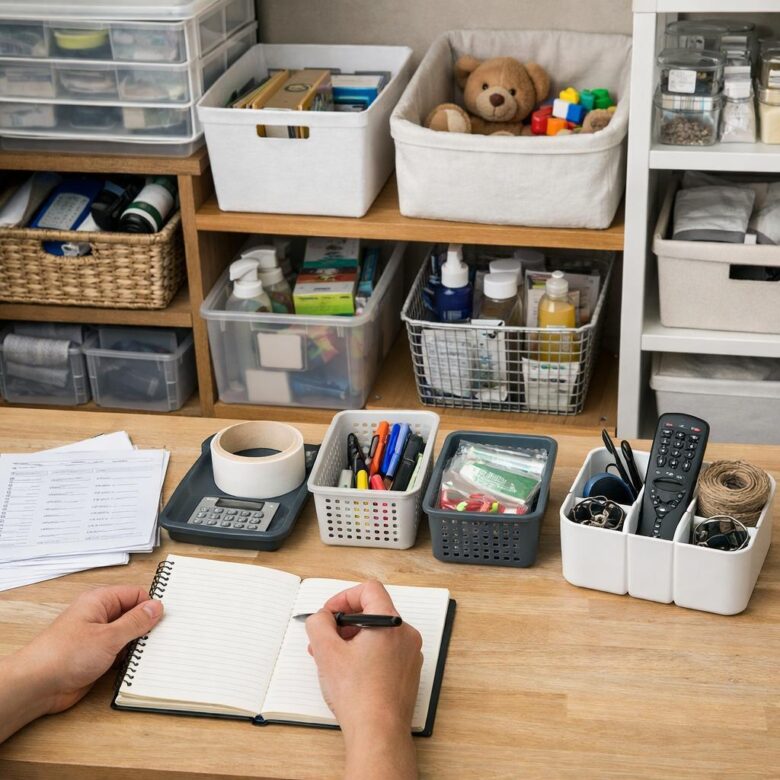
- Small boxes can divide drawers.
- Open baskets can collect toys, accessories, or cleaning cloths.
- A tray can contain keys, wallets, and outgoing mail.
- A simple paper file can separate items to action, file, or recycle.
- Removable hooks can add accessible storage where permanent hardware is unsuitable.
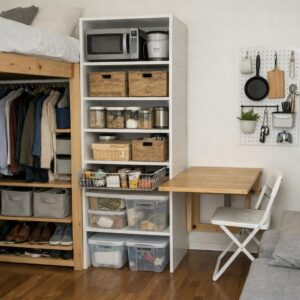
In a rental, favor freestanding shelves, over-door organizers, and removable hooks where permitted by the lease. In an owned home, fixed hooks or shelving may be worthwhile for stable routines, but it still makes sense to test the location before installing anything permanent.
For a small home, prioritize vertical storage and keep fewer duplicates. In a larger home, avoid scattering the same category across several rooms unless each location serves a clear purpose. A small set of cleaning supplies on each floor may be practical; five unrelated places for spare batteries usually are not.
Set up the rooms that carry daily traffic
Entryway
Create a landing place for items carried in and out of the home. Depending on the household, this might include hooks for bags, a shoe tray, a bowl for keys, and one container for items that need to leave the house.
Kitchen
Keep everyday cookware and ingredients near the places where they are used. Group food by practical categories, but do not transfer everything into matching containers unless doing so improves visibility or protects the contents. Add an overflow area only for supplies you regularly keep in reserve.
Bedroom and laundry
Place hampers where clothes are commonly removed. If clean clothes tend to wait in a basket, simplify the folding or storage categories rather than adding more baskets. Hooks can provide a temporary home for clothing that is not ready to wash but should not return to a drawer.
Home office or paperwork area
Separate incoming paper into a few action-based groups. For example: deal with, file, and recycle or shred. Keep only active work on the desk, with supplies in a nearby drawer or container. A single inbox is easier to review than paper piles in several rooms.
Add a short reset routine
Even a sensible system needs maintenance. Choose a regular 10-minute reset rather than waiting for another major cleanout. Weekly is a useful starting point, but busy entryways or kitchens may need a shorter daily reset.
- Return out-of-place items to their assigned homes.
- Empty obvious rubbish and recycling.
- Process the paper inbox.
- Check any category that has exceeded its container.
- Move items waiting to be donated or taken elsewhere.
A carry basket can help during a reset: collect objects that belong in other rooms, then return them in one trip. The basket should support the routine, not become permanent storage for unsorted items.
Adjust systems that are not being used
If the same clutter returns to the same place, treat it as information. The assigned home may be too far away, too full, difficult to open, or unclear to other household members. Move the storage closer, simplify the category, or reduce the number of steps needed to put something away.
Work on one problem area until the new arrangement feels manageable, then move to the next. A modest system that fits everyday behavior is more useful than an elaborate setup that requires constant attention.

The Anna Leong Editorial Team creates practical guides about home organization, cleaning routines, household care, and productive workspaces. We focus on clear steps, realistic examples, and advice readers can adapt to their own homes.