You do not need an elaborate checklist or a cabinet full of tools to maintain a home. Start with a 20-minute monthly inspection focused on water leaks, safety alarms, filters, and drainage. Add a few seasonal checks, record anything that needs attention, and arrange repairs before visible damage spreads.
The right schedule depends on the home. An apartment renter will have fewer responsibilities than the owner of a detached house, while an older property may need more frequent checks than a newer one. Use the routine below as a starting point, then adjust it for your appliances, climate, lease, and manufacturer instructions.
Begin with the problems that matter most
When time and money are limited, prioritize maintenance by consequence rather than appearance. Water intrusion, malfunctioning alarms, damaged electrical components, and blocked ventilation deserve attention before chipped paint or a squeaky cabinet hinge.
- Water: Look for active drips, damp cabinets, ceiling stains, loose toilet bases, damaged appliance hoses, and water collecting near the building.
- Life safety: Test smoke and carbon monoxide alarms as directed by their manufacturers. Check their replacement dates, not just their batteries.
- Airflow and ventilation: Inspect heating and cooling filters, range hood filters, bathroom ventilation, and the dryer lint screen.
- Drainage and weather protection: Watch gutters, downspouts, exterior seals, and weatherstripping for deterioration.
- Everyday wear: Note loose hardware, sticking doors, damaged cords, and appliance parts that are becoming difficult to operate.
This order helps keep cosmetic jobs from consuming the small amount of time or money available for more urgent work.
Create a simple home inventory
Before scheduling tasks, list the equipment and features you actually have. Include the heating and cooling system, water heater, major appliances, alarms, gutters, outdoor faucets, sump pump, and any accessible shutoff valves. Record model numbers and keep manuals or links to digital manuals in one place.
Manufacturer instructions matter because maintenance intervals vary. An HVAC filter does not automatically need monthly replacement, for example. Its size, filter type, system use, pets, dust, and indoor air conditions all affect how quickly it becomes dirty. Inspect it regularly, but replace it according to its condition and the system instructions.
Owners can keep this inventory with repair receipts and warranty details. Renters can make a shorter list covering the tasks assigned to them by the lease, along with the correct way to report leaks, alarm problems, pests, or appliance failures.
A practical maintenance schedule
| Frequency | Checks and tasks | What to record |
|---|---|---|
| Monthly | Inspect visible plumbing, test alarms, check HVAC filters, clean accessible ventilation filters, and look around appliances for moisture or damaged cords. | Leaks, stains, unusual smells, filter condition, alarm issues, or changes since the previous check. |
| Seasonally | Check drainage from ground level, inspect caulk and weatherstripping, examine appliance hoses, and prepare outdoor fixtures for local weather. | Cracks, gaps, standing water, loose downspouts, brittle hoses, or work requiring a ladder or professional. |
| Annually or as directed | Review appliance manuals, warranties, service intervals, emergency contacts, insurance details, and the condition of rarely inspected areas. | Upcoming service, aging equipment, repeat repairs, and supplies that need replacement. |
The monthly 20-minute check
Walk through the home in the same order each month so that the routine becomes easy to repeat. Use a flashlight to look under sinks and around toilets, the water heater, dishwasher, washing machine, and refrigerator water line where accessible. A dry paper towel can help reveal slight moisture around a visible connection without taking anything apart.
Look up as well as down. New ceiling discoloration, peeling paint, swollen trim, or a musty area can indicate moisture that needs investigation. Do not cover a stain with paint until its source has been identified.
Test smoke and carbon monoxide alarms using their test buttons and follow the manufacturer’s directions for batteries and unit replacement. Check the HVAC filter without forcing open unfamiliar equipment. Wash a reusable range hood filter only if its instructions permit it, and clean the dryer lint screen after every load rather than waiting for the monthly routine.
The seasonal check
From the ground, look for overflowing gutters, disconnected downspouts, damaged roof edges, and water collecting near the home after rain. Gutters may need more frequent attention where trees shed heavily. If safe cleaning requires a ladder, roof access, or work near power lines, hire appropriate help rather than treating it as a routine do-it-yourself task.
Inspect accessible caulk around tubs, showers, sinks, windows, and doors. Cracked or detached caulk may need replacement, but do not seal over damp, soft, or visibly damaged material. The underlying moisture problem should be addressed first. Exterior openings and drainage features also should not be sealed indiscriminately.
Check washing machine and dishwasher hoses for bulges, cracks, abrasion, or damp fittings. Avoid pulling out a heavy appliance or disconnecting a line simply to complete the checklist. If a hose is inaccessible or appears damaged, arrange service.
Keep the tool kit small
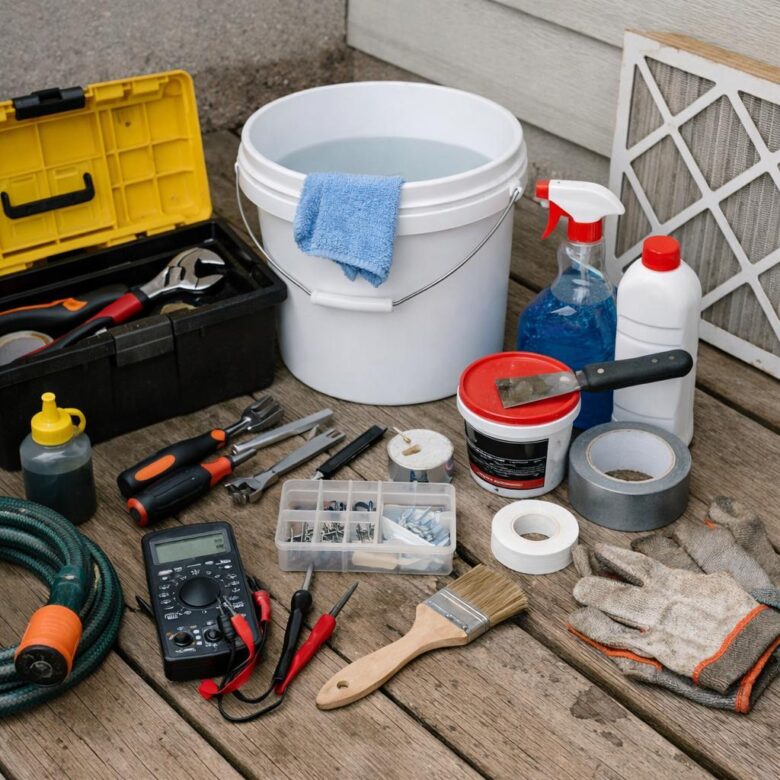
A basic inspection kit can be assembled gradually. Most households only need a flashlight, spare alarm batteries where applicable, suitable replacement filters, washable cloths, a small screwdriver set, work gloves, and a notebook or phone list. A caulk gun and the correct sealant are useful only if caulking is part of your responsibilities and the surface is suitable for a simple repair.
Optional leak alarms can be placed near washing machines, water heaters, or under sinks, provided they do not interfere with appliances. They add an alert but do not replace visual checks or repairs.
A recurring phone reminder is enough for scheduling. Use a paper checklist if it is more likely to be noticed. The system should record three things: the date, what was checked, and what needs follow-up.
Decide what to fix and what to report
Simple upkeep may include changing an accessible filter, tightening ordinary cabinet hardware, cleaning a washable vent cover, or replacing deteriorated caulk on a dry and sound surface. Stop when a job involves concealed plumbing, fixed wiring, gas equipment, a roof, structural damage, or instructions you cannot follow confidently.
Safety note: Do not open an electrical panel, dismantle heating equipment, investigate a gas odor, or climb onto a roof as part of a routine inspection. For a gas odor, leave the area and follow the gas utility’s emergency guidance. Report burning smells, hot or discolored outlets, recurring breaker trips, sagging ceilings, significant water intrusion, or extensive mold promptly to the landlord or an appropriate professional.
Renters should document concerns with dated notes or photographs and use the reporting process in the lease. Avoid making alterations that require the owner’s approval. Owners should keep records of repeat problems; a recurring stain or repeatedly tripped breaker needs diagnosis rather than another temporary patch.
Budget for follow-up, not gadgets
Set aside a manageable amount for filters, batteries, sealant, and small repairs, plus a separate reserve for work that cannot be handled safely. When the budget is tight, spend first on active water problems and safety equipment. Optional monitoring devices and cosmetic improvements can wait.
Review the checklist after three months. Remove tasks that do not apply, change frequencies that are unrealistic, and add any issue particular to the home. A short routine that gets completed is more useful than a comprehensive list that is repeatedly postponed.

The Anna Leong Editorial Team creates practical guides about home organization, cleaning routines, household care, and productive workspaces. We focus on clear steps, realistic examples, and advice readers can adapt to their own homes.