If cleaning takes longer than it should or surfaces seem dirty again almost immediately, the problem may be the method rather than the effort. Start with three corrections: measure products instead of pouring freely, remove dry debris before using wet cleaners, and give each product the label-directed time to work.
Those changes reduce residue, prevent dirt from being moved around, and make better use of the supplies already in your cabinet. The following common mistakes are also worth correcting before buying another cleaner or appliance.
1. Using more cleaner than the label recommends
Extra product does not automatically mean extra cleaning power. Too much floor cleaner can leave a sticky film that attracts dirt. Excess laundry detergent may remain in fabric or create buildup in a washing machine, while too much dishwashing detergent can leave residue on dishes or inside the appliance.
Measure concentrated products according to the label, including any adjustments for load size, water hardness, or machine type. For small jobs, mix only what you need. If a surface still looks dull after cleaning, do not immediately add more product; first check whether existing residue needs to be removed with the surface manufacturer’s recommended method.
2. Spraying and wiping immediately
Many cleaners need time on the surface to loosen grease, soap residue, or stuck-on dirt. Disinfectants have a more specific requirement: the surface generally must remain visibly wet for the contact time stated on the label. Wiping too soon may mean the product has not been used as directed.
- Remove crumbs, dust, and visible grime first.
- Apply the product as directed.
- Allow the stated dwell or contact time.
- Wipe or rinse if the label requires it.
More is not always better here, either. Use enough to follow the directions without unnecessarily soaking the surface.
3. Cleaning in the wrong order
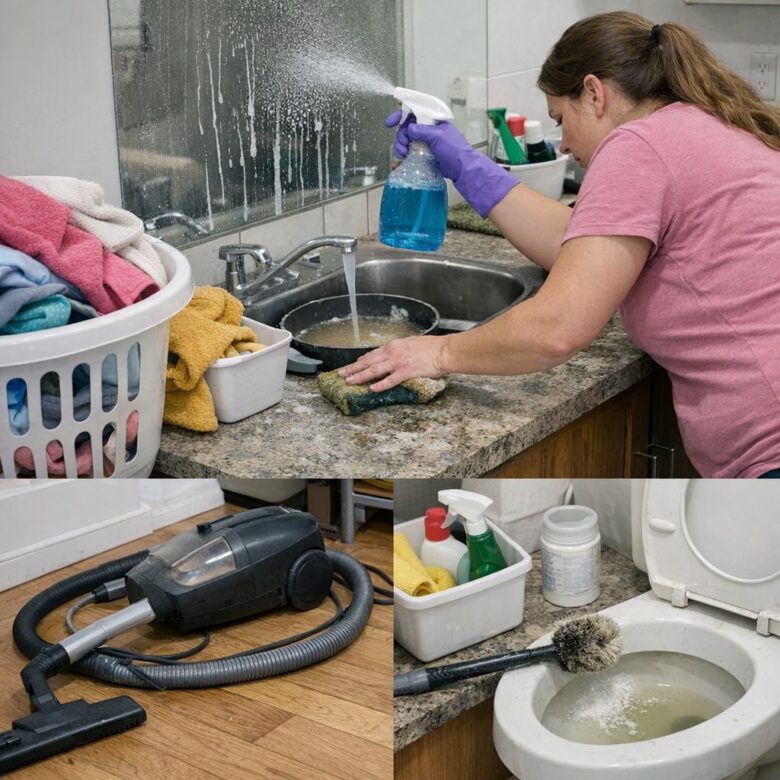
Starting with the floor often creates repeat work because dust and crumbs fall as shelves, counters, and furniture are cleaned. A more efficient order is top to bottom and dry to wet.
Dust higher surfaces first, then clean counters and furniture, vacuum or sweep, and finish with damp floor cleaning if needed. In a bathroom, remove hair and loose dust before spraying fixtures or washing the floor. Wet hair is harder to collect and can cling to cloths, corners, and drains.
There is no need to follow this order rigidly for every spill. Deal with fresh stains and liquids promptly, then return to the normal sequence.
4. Wiping with an overloaded cloth
A cloth eventually becomes too damp or dirty to pick up more soil. Continuing to use it can spread grease, dust, or cleaner residue across the next surface.
Fold a microfiber cloth into sections and switch to a clean section as each one becomes dirty. Keep several cloths available for a full-room clean, and use separate cloths for toilets and food-preparation areas. Wash reusable cloths according to their care instructions. Fabric softener can reduce the absorbency of some microfiber products, so check the label before adding it.
Paper towels still have a role for unpleasant or potentially contaminated messes, but they do not need to be the default for ordinary dusting and wiping.
5. Using one cleaner on every surface
An all-purpose cleaner can simplify routine care, but “all-purpose” does not mean suitable for every material. Natural stone, unfinished wood, sealed hardwood, acrylic, appliance coatings, and electronics may have different requirements.
Acidic cleaners such as vinegar can etch marble and other acid-sensitive stone. They may also be unsuitable for some grout, finishes, and appliance components. Abrasive powders or rough pads can scratch glass, stainless steel, acrylic shower panels, and glossy cooktops.
Before applying an unfamiliar product, check both the cleaner label and the surface care guide. Test it in an inconspicuous spot when appropriate. Renters should be especially cautious with provided countertops, flooring, and appliances because damage may affect the security deposit.
6. Spraying electronics and control panels directly
Direct spraying can allow moisture to enter seams, buttons, vents, and touch controls. Turn the device off and unplug it when the manufacturer instructs you to do so. Apply an approved cleaner lightly to a cloth rather than spraying the screen or control panel, then wipe without saturating the area.
Follow the device maker’s instructions for televisions, monitors, laptops, smart-home equipment, and appliance displays. Screen coatings vary, and a product that is safe for a window may not be safe for an electronic display.
7. Neglecting the cleaning tools
A vacuum with a full bin, blocked airflow, tangled brush roll, or overdue filter maintenance will not work as efficiently. A dirty mop can redeposit grime, and a packed broom head sheds dust as quickly as it gathers it.
- Empty vacuum bins or replace bags as recommended.
- Check brush rolls and floor heads for wrapped hair and thread.
- Clean or replace filters according to the manual; not every filter is washable.
- Rinse mop heads after use and allow them to dry fully.
- Wash buckets and brushes before storing them.
Tool maintenance is usually more useful than replacing a functioning vacuum or mop with a newer model. If a machine has poor suction after basic maintenance, consult its manual rather than taking apart electrical components.
8. Mopping before vacuuming or sweeping
Wet cleaning over crumbs, grit, pet hair, and dust creates muddy streaks and fills the mop head quickly. Grit may also scratch vulnerable flooring when dragged across it.
Remove loose debris first, paying attention to edges and the areas beneath dining tables or cabinets. In a small home, a broom or compact vacuum may be enough. Larger or pet-heavy households may find frequent vacuuming useful, but an automated or premium machine is optional rather than essential.
9. Letting small buildup become a deep-cleaning job
Brief preventive tasks can reduce the need for aggressive scrubbing later. A shower squeegee removes some water from doors and walls before mineral deposits and soap residue accumulate. Wiping cooking splashes after the cooktop has cooled is easier than dealing with repeatedly heated grease. Emptying a crumb tray also prevents old debris from building up inside a toaster or countertop oven.
Choose prevention based on the problems in your home. A household with hard water may prioritize drying fixtures and shower glass. A home with pets may benefit more from short, frequent passes over high-traffic floors.
10. Buying a separate product or machine for every problem
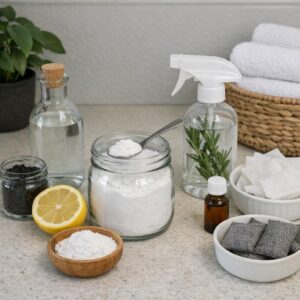
A crowded cleaning cabinet makes it harder to see what you already own, and partially used products may expire or be forgotten. Most routine jobs can be handled with a small set of compatible supplies: a cleaner suitable for your main surfaces, dish soap, microfiber cloths, a non-scratch pad, a brush, and basic floor-care tools.
Specialty products make sense when the material or problem requires one, such as a stone-safe cleaner or a manufacturer-approved descaler. Bulky equipment deserves more consideration. If carpet or upholstery extraction is an occasional task, renting a suitable machine may cost less and require no long-term storage. Buying may be practical for a larger household that will use it regularly, provided the equipment is approved for the material being cleaned.
A simple way to improve your next cleaning session
| Before cleaning | While cleaning | After cleaning |
|---|---|---|
| Read the product and surface instructions | Work from high areas to low areas | Rinse or wash reusable tools |
| Gather enough clean cloths | Remove dry debris before wet cleaning | Allow tools to dry before storage |
| Measure concentrated products | Observe dwell or contact time | Refill only supplies that are genuinely low |
Never mix cleaning products. In particular, bleach must not be combined with ammonia, vinegar, acids, or other cleaners because dangerous fumes can result. Use adequate ventilation, keep products in their original labeled containers, and store them away from children and pets.
Efficient cleaning is not about using stronger chemicals or owning more equipment. It comes from matching the product to the surface, letting it work as directed, keeping tools clean, and preventing manageable messes from turning into larger jobs.

The Anna Leong Editorial Team creates practical guides about home organization, cleaning routines, household care, and productive workspaces. We focus on clear steps, realistic examples, and advice readers can adapt to their own homes.